Neueste Artikel

52 mal berührt: Aquaman #1

DC Comics startet sein komplettes Superhelden-Universum neu. COMICGATE trifft sich zum Speed-Dating mit den Erstausgaben aller 52 Serien. Wird es dabei zu heißen Spätsommer-Flirts kommen? Zu wilden Schlabberzungenküssen? Oder bleibt es doch eher beim Austausch lauer Unverbindlichkeiten? Hier ist alles drin, Freunde der Sonne. Folge 48 von 52: AQUAMAN #1 von Geoff Johns und Ivan Reis.

aquaman

MARC-OLIVER:alt Die gute Nachricht zuerst: Für einen Comic von den Leuten, die an Blackest Night schuld sind, ist Aquaman gar nicht mal sooo übel. Die schlechte Nachricht: Besonders gut gemacht ist das Heft trotzdem nicht.

Dabei gibt es sogar einiges, was mir hier ganz gut gefällt, wie etwa die Zeichnungen von Ivan Reis. Der Mann steht stilistisch fest in der Tradition so ziemlich aller Künstler, die im traditionellen Superheldengenre schon mal irgendwann stilprägend waren, bewahrt sich aber dennoch eine eigene Identität und gibt dabei auch einen ganz passablen Erzähler ab.

Das kann man von Geoff Johns leider nicht behaupten. Geoff Johns erzählt ungefähr so Geschichten, wie ich früher an Kindergeburtstagen Schokolade gegessen habe: mit Handschuhen, Messer und Gabel und einer lustigen Mütze auf dem Kopf. Der Mann stellt sich dabei nicht nur generell plump und ungelenk an, sondern zwängt – ähnlich wie etwa auch Bendis – seinen Figuren ständig Dialoge und Situationen auf, von denen sofort klar ist, dass sie einzig dazu da sind, um irgendeine komische Fan-Fraktion direkt anzusprechen, weil man sie von irgendwas überzeugen will. In anderen Worten: Der Autor sollte vielleicht mehr Zeit mit Schreiben verbringen und weniger Zeit damit, sein eigenes Message Board zu lesen. Es täte seinen Figuren gut, wenn er sie in ihren Comics auch mal was sagen lassen würde.

Im konkreten Fall heißt seine Handpuppe nun also Aquaman, und der muss sich dagegen verteidigen, von allen belächelt zu werden. Keine schlechte Idee, prinzipiell, wenn man sich die Mühe machen würde, es in eine ordentliche Dramaturgie zu verpacken. Da wir es aber mit Geoff Johns zu tun haben, setzt er seine arme Figur einfach in ein Restaurant, und dann geht das Gelaber los – das, so stellt sich raus, zur einen Hälfte aus langweiliger Exposition besteht und zur anderen den Helden als wenig souveränen Miesepeter erscheinen lässt, der keinen Spaß versteht und sich auch noch wundert, dass er veräppelt wird, wenn er in seinem Aufzug irgendwo reinspaziert und Fisch bestellt. Und besser kennenlernen tut man Aquaman dabei auch nicht. Da hätte man sooo viel draus machen können. Dass es nichts damit geworden ist, hängt aber tatsächlich nicht an Aquaman, sondern an der Unzulänglichkeit und Faulheit des Autors.

Björn hatte das Phänomen ja schon in seiner Green-Lantern-Corps-Rezension angesprochen, und es trifft auch hier zu: Man hat so große Angst davor, dass die Figuren belächelt werden könnte, dass man aus diesem Minderwertigkeitskomplex heraus völlig maßlos überkompensiert und die Geschichte mit unnötigem Gepäck überfrachtet, das da eigentlich nichts zu suchen hat. Die Geschichte selbst muss einfach nur gut sein, sonst nichts – dann passt’s schon mit der Wahrnehmung der Figur. Die Johns’sche Blutrunst streckt dem Leser am Ende des Comics übrigens auch schon wieder ihre rotgetränkte Fratze entgegen. So it goes.

Ich könnte jetzt noch was über die unterirdische Darstellung der beiden weiblichen Figuren mit Sprechrollen schreiben, aber das wird bei Johns wohl auch niemanden mehr überraschen. Ich zweifle gar nicht daran, dass man selbst mit Aquaman coole Sachen anstellen kann, wenn man sich Mühe gibt und seine kreative Leistung nicht darauf beschränkt, die Hauptfigur an einen Tisch zu setzen und loslabern zu lassen. Was Johns hier abliefert, ist billig und durchschaubar – Anbiederei auf unterster Schiene.

ZOOM-FAKTOR: 2 von 10!


BJÖRN: Das mit Blackest Night kann ja noch kommen: Der fies knurrende Aquaman auf dem Titelbild und die vielzahnigen Tiefseemonster werden schon noch zu ordentlich Gore und Weltschmerz führen. Nur in dieser Ausgabe halt noch nicht, weil Geoff Johns zu beschäftigt damit ist, auf Strohmänner einzudreschen.

Ja, Aquaman ist ein Mem für lahme Superhelden geworden. Und Geoff Johns hat das Gefühl, die Figur des Aquaman gegen diese fiese Schmähkritik verteidigen zu müssen, und dabei kommt er selbst noch schlechter weg als Aquaman. Dass Aquaman ein humorloser Kauz ist? Damit kann ich leben. Das ist er in The Brave and the Bold auch. Aber da ist es schon wieder grandios, weil er sich überhaupt nicht bewusst ist, wie humorlos er ist. Stattdessen vermöbelt er einfach selbstgefällig und in völlig überzogener Brian-Blessed-Manier Schurken.

Natürlich muss Geoff Johns nicht die übertriebene Interpretation aus The Brave and the Bold übernehmen, aber ein bisschen Rückgrat würde nicht schaden. Hier hat man das Gefühl, dass Geoff Johns das Skript mit einer Hand getippt hat, weil er mit der anderen Hand gerade unter dem Schreibtisch zu beschäftigt war. Es gibt diesen Spruch, dass vor ein paar Jahren Comicmacher noch Fans waren, heute sind sie Fanboys. So liest sich das hier auch: Das wütende „Leave Aquaman alone!“-Manifest eines Fanboys. Hört auf, Witze über Aquaman zu machen, ihr bösen, bösen Leute!

Fünfzehn Seiten lang bombardiert uns Johns mit Erklärungen, warum Aquaman voll cool ist! Ein wie Harry Knowles aussehender Fettsack lacht darüber, dass Aquaman mit Fischen spricht? Da muss Aquaman aber erstmal im Detail erklären, was seine Kräfte wirklich sind und wieso sie voll cool sind.  Und dann kommt der gemeine Blogger und fragt, wie es ist, ein Versagersuperheld zu sein, den keiner mag. Und dann witzelt er darüber, dass Aquaman behauptet, aus Atlantis zu stammen. Weil: In einem Universum, in dem Vampire, Dämonen und Außerirdische in freier Wildbahn herumfliegen, ist es doch absolut lächerlich, wenn der Kerl mit den Fischkräften behauptet, aus Atlantis zu stammen. Wer glaubt denn so was? Und während Aquaman erzählen muss, wie toll er ist, schmachten die Frauen ihn an. Um nochmal zu unterstreichen, wie toll Aquaman ist. Weil Aquaman toll ist! Toll! Toll! Toll! Versteht das doch endlich! Toll!

So wie es bei Deathstroke unglücklich war, erstmal erklären zu müssen, wie bösarschig der Protagonist ist, so wirkt es hier unglaublich unsouverän, dass Geoff Johns zu einer so großspurigen Verteidigung des Meereshelden ansetzen muss. Von seinen Kräften bis zum Hemd, alles glaubt Johns in Schutz nehmen zu müssen … und lässt dadurch sich und Aquaman nur noch peinlicher wirken. Dabei hätte er den Kritikern locker begegnen können: Die etwas albernen Aspekte von Aquaman augenzwinkernd anerkennen und dann losziehen und ihm eine so große und unterhaltsame Actionszene auf den Leib schreiben, dass es scheißegal ist, was die Kritiker denken. Weil man sieht, dass Aquaman knorke ist, sofern ihn ein fähiger Autor schreibt. Stattdessen: Aquaman heult sich 15 Seiten lang in einem Fischrestaurant aus. Und das ist das exakte Gegenteil von knorke.

Auf den letzten drei Seiten fällt Johns dann irgendwie ein, dass er ja noch so was wie eine richtige Geschichte erzählen muss, aber da ist es auch schon zu spät. Immerhin sind die Zeichnungen von Ivan Reis hübsch, auch wenn seine Seitenlayouts an Monotonie kaum noch zu überbieten sind.

ZOOM-FAKTOR: 2 von 10!


Bereits im Juni hatte COMICGATE alle 52 neuen DC-Serien vorurteilslos begutachtet und eingeordnet: Teil 1, Teil 2, Teil 3, Teil 4.

Alle Folgen von „52 mal berührt“

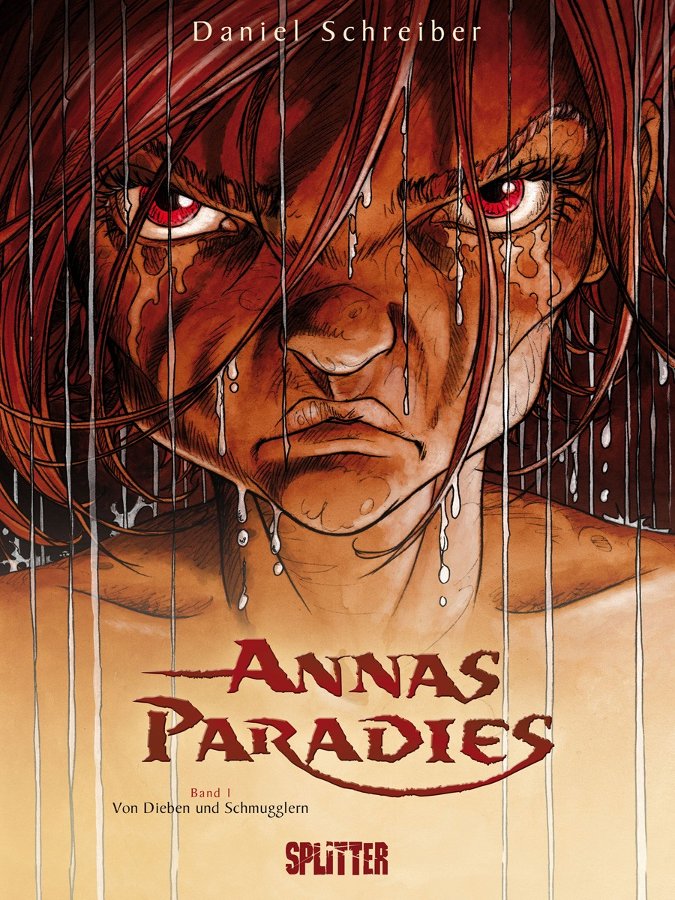
Annas Paradies 1 – Von Dieben und Schmugglern

Cover Annas Paradies 1Eines muss man sich hier direkt staunend vor Augen halten: Annas Paradies ist die erste Serie von Daniel Schreiber. Ursprünglich war die Geschichte als Film geplant. Als Schreiber aber neue Ideen kamen, arbeitete er das Drehbuch in ein Comicskript um und realisierte so seine erste Serie. Gänzlich unerfahren ist der Autor im graphischen Bereich nicht, da er schließlich schon seit 15 Jahren als Illustrator arbeitet. Aber in dieser engen Text-/ Bildkombination, wie es in einem Comic nun mal der Fall ist, hatte er bislang noch nicht gearbeitet. So ist es eigentlich auch wenig verwunderlich, dass Daniel Schreiber relativ wenig mit Text arbeitet, sondern eher die Bilder die Geschichte weiterbringen. Diese ist im ersten Band noch recht übersichtlich, was verständlich ist, wenn man weiß, dass dieser Abschnitt der Handlung nur die Exposition für den geplanten Film sein sollte.

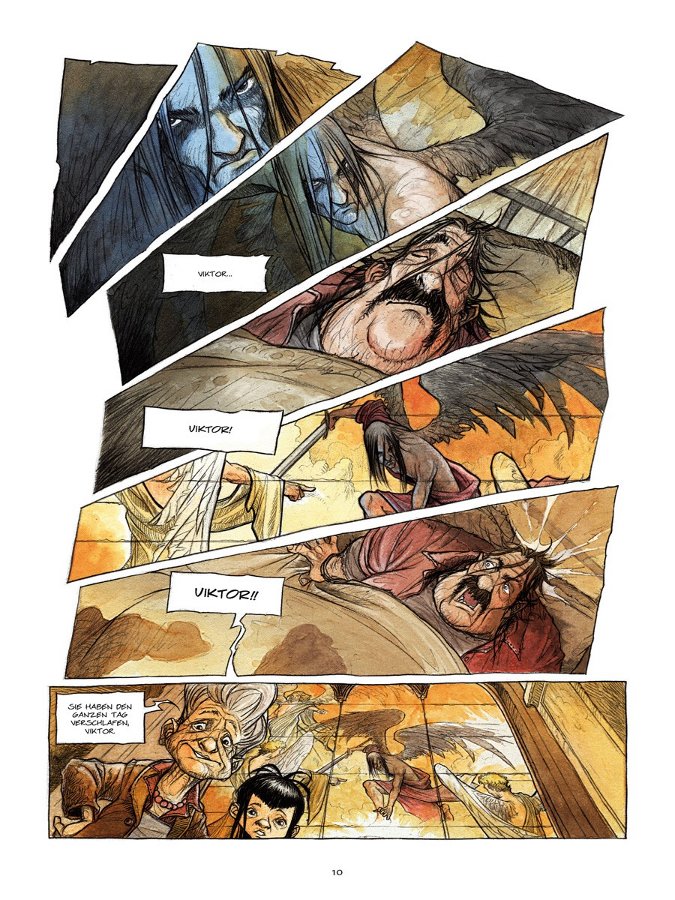
Seite aus Annas Paradies 1Im Winter 1946 liegt Deutschland wie der Rest Europas am Boden. In einer deutschen Stadt, erklärt sich der Schmuggler und Schwarzmarkthändler Viktor bereit, einen Nazi-General mitsamt Familie aus einem Viertel zu schleusen, das „das kleine Paradies“ genannt wird. Als sie in eine britische Kontrolle geraten, kommt es zu einem Feuergefecht, in dessen Verlauf der General und seine Frau sterben. Eher widerwillig nimmt sich Viktor deren Tochter an und gelangt in den Besitz einer Tasche mit geheimnisvollem Inhalt. Als wäre das noch nicht genug, fällt eines Tages eine junge Frau im wörtlichen Sinne vom Himmel. Zwar hat sie Flügel, die gelegentlich zum Vorschein kommen. Aber ein Engel scheint sie nicht zu sein.

Noch ehe man sich die Frage stellen kann, ob diese junge Frau, Anna, gut oder böse, Engel oder Dämon ist, wird sie auch schon beantwortet: Zu den Guten gehört sie nicht unbedingt. So wird zwar ein mögliches Spannungselement verschenkt, andererseits kann Anna somit als Symbol für die deutsche Seele kurz nach Ende des Zweiten Weltkrieges stehen.

Geboren aus Hass legten die Nazis Europa in Schutt und Asche. Ähnlich wie Anna als Kind durch Hass erweckt wird und für Zerstörung sorgt. Als sie registriert und reflektiert, was sie angerichtet hat, fällt sie vom bisherigen Glauben ab, wie die deutsche Bevölkerung angesichts des Kriegsgrauens von der herrschenden Ideologie. Anna versucht nun, gut zu sein, wobei ihr böses Naturell immer wieder nach vorn drängen möchte. Gerade dieser Aspekt ist es, der nicht nur die erwähnte Symbolik verfeinert, sondern für Spannung innerhalb des Comics sorgt. Man kann seine Vergangenheit und seinen bisherigen Glauben nicht einfach so abschütteln. Ähnlich wie die Verrohung und die Ideologie noch in der Bevölkerung schlummern (bis heute), so kann auch Anna ihre Natur nicht von einem Moment zum anderen ändern. Gerade dieser Zwiespalt sorgt für die Dramatik und die Spannung des ersten Bandes, der somit mehr von seinen Figuren als von der äußeren Handlung lebt.

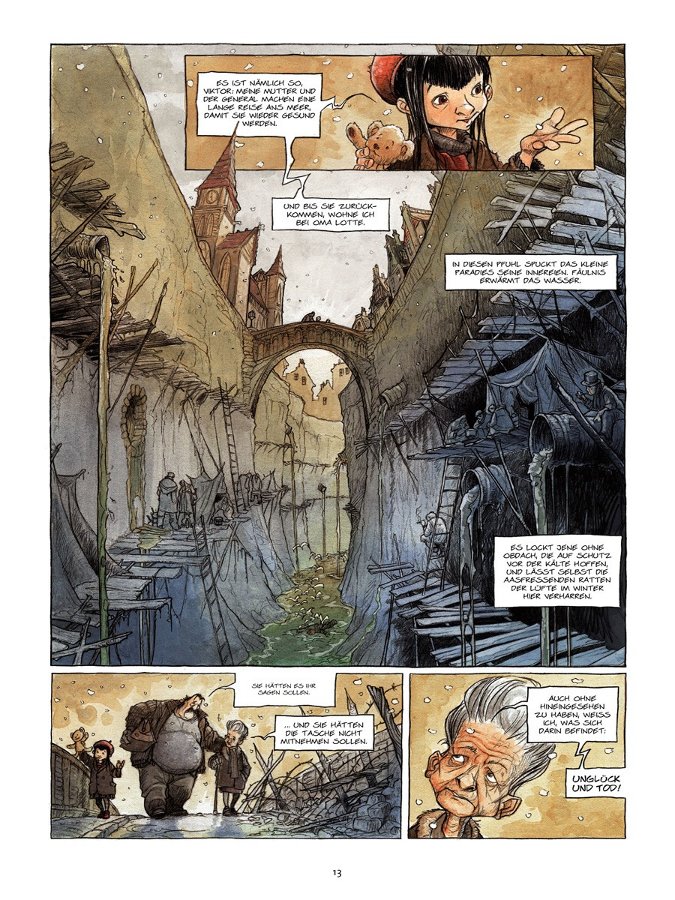
Seite aus Annas Paradies 1Gerade die Zeichnungen treiben das Geschehen voran. Schreiber baut seine Seiten sehr geschickt auf, man erkennt seine Erfahrung als Illustrator, mit einem Bild viel zu erzählen. Leicht expressionistisch angehaucht, warten sie mit vielen gewagten Perspektiven auf und scheuen sich nicht vor Verzerrungen. Viele Worte und längere Monologe werden vermieden. Gerade Annas innerer Zwiespalt wird anschaulich anhand eines Bildes ihres inneren Blutkreislaufs dargestellt. Ein einzelnes Bild des inneren Organismus verdeutlicht die körperliche Verwandlung, das Adrenalin durch die Wut, die Erregung. Der US-Verlag Marvel hätte an dieser Stelle wohl mindestens einen dreiseitigen Monolog eingefügt. Die Panelanordnungen sind auch sehr filmisch und erzählen viel. Äquivalenzen zu Kamerafahrten, schnellen Schnittfolgen und passender Farbdramaturgie ergeben ein hohes Tempo, Dynamik und Spannung. Hier wird deutlich, dass der Comic einem Drehbuch entspringt. Ein sehr beachtliches Debüt, das Lust auf mehr macht. Auf viel mehr.


Wertung: 9 von 10 Punkten

Beachtliches Comicdebüt, das es versteht, fast nur anhand von Bildern zu erzählen, wobei die eigentliche Story noch allzu übersichtlich ist.


Annas Paradies 1 – Von Dieben und Schmugglern
Splitter Verlag, Oktober 2011
Text und Zeichnungen: Daniel Schreiber
48 Seiten, farbig, Hardcover
Preis: 13,80 Euro
ISBN: 978-3-86869-297-6
Leseprobe

 Jetzt beim Fachhändler Comic Combo anschauen und bestellen!    Jetzt bei amazon.de anschauen und bestellen!

Abbildungen: © Daniel Schreiber/Splitter Verlag

52 mal berührt: Teen Titans #1

DC Comics startet sein komplettes Superhelden-Universum neu. COMICGATE trifft sich zum Speed-Dating mit den Erstausgaben aller 52 Serien. Wird es dabei zu heißen Spätsommer-Flirts kommen? Zu wilden Schlabberzungenküssen? Oder bleibt es doch eher beim Austausch lauer Unverbindlichkeiten? Hier ist alles drin, Freunde der Sonne. Folge 47 von 52: TEEN TITANS #1 von Scott Lobdell und Brett Booth.

teen_titans

MARC-OLIVER: Der Comic ist nicht halb so schlecht wie ich dachte. Okay, verstehen wir uns nicht falsch: Von der Optik her wäre das Heft 1992 nicht aus dem Rahmen gefallen, eine Szene mit Red Robin ist dreist aus Minority Report geklaut, und auch sonst kommen der Plot und die Figuren nicht unbedingt frisch daher. Aber bei Scott Lobdell und Brett Booth, noch dazu unter einem Chefredakteur Bob Harras, kommt das alles ja nun nicht überraschend. Nein, das Verblüffende ist, dass Teen Titans trotz allem ein relativ lesbarer, sogar leidlich unterhaltsamer Action-Thriller geworden ist.

Lobdell hat jedenfalls schon wesentlich Schlimmeres angerichtet als das hier. Das Heft besteht aus vier Szenen, die zwar keine Preise gewinnen werden, es aber schaffen, die jeweiligen Figuren unfallfrei einzuführen, ohne dabei Langweile aufkommen zu lassen. Die Figuren selbst sind dabei durch die Bank unsympathische Spacken, wohlgemerkt, egal ob Helden oder Schurken. Das kann funktionieren, kann aber auch schnell schiefgehen, wenn nicht bald wenigstens ein Sympathieträger auftaucht. Booths Stil hat sich zwar kaum verändert, aber immerhin hat er einen eigenen, halbwegs erkennbaren Stil, was man ja beileibe nicht allen Jim-Lee-Klonen attestieren kann. Seine Seitenlayouts sind eher antiquiert und ab und an doch etwas rumpelig und unbeholfen, aber auch er macht seinen Job ohne große Schnitzer und hat, was das Storytelling von Seite zu Seite angeht, in den letzten zehn Jahren sogar beachtlich zugelegt.

Leider gibt’s am Ende dann noch den Wermutstropfen, dass man wohl ziemlich direkt in einen Crossover-Modus mit dem ebenfalls von Lobdell geschriebenen Superboy eintreten will. Das kostet nochmal einen Punkt. Dennoch: Modell dummer, lauter Action-Thriller mit Kurzzeit-Unterhaltungswert.

ZOOM-FAKTOR: 5 von 10!


BJÖRN: Vielleicht sind wir es falsch angegangen. Vielleicht hätten wir festhalten sollen, wann ein Comic nicht wie frisch aus den frühen Neunzigern aussieht oder sich so anfühlt.

Egal, Teen Titans ist ein gefälliger, unfallfreier Teenie-Comic geworden. Gen13 mit Robin und Wonder Girl. Und erstaunlicherweise schafft es Lobdell sogar, einen Comic mit Teen-Protagonisten zu schreiben, in dem man sich nicht erst durch literweise Blut und Gedärm schlagen muss, um bei der Geschichte anzukommen. Gut, die „jugendliche Metamenschen sind eine Gefahr für uns und werden gehasst“-Schiene ist schon sehr X-Men, aber Lobdell hat das in den Neunzigern bei Marvel kompetent gekonnt, warum soll er es in den 10ern nicht bei DC nochmal machen. Schuster und Leisten und so. Deutlich weniger von den Dauermonologen ausgebremst als Superboy, deutlich verständlicher erzählt als Red Hood.

Und die Teenager, besonders Kid Flash, sind hier – wie du sagst – ganz bewusst unsympathische Spacken, was auf jeden Fall besser funktionieren sollte als die Teenie-Helden in den anderen Titeln, die cool wirken sollen, aber einfach nur völlig vertrottelt daherkommen.

Was Brett Booth betrifft: Im Vergleich zu dem, was er in Anita Blake abliefert, ist das hier schon fast große Kunst. Liegt vielleicht an Andrew Dallhouses knalliger Koloration.

Einmal mehr: Grundsolide Superheldenarbeit. Meilenweit besser als die anderen Sachen, die Lobdell im Rahmen des Neustarts verbrochen hat.

ZOOM-FAKTOR: 5 von 10!


Bereits im Juni hatte COMICGATE alle 52 neuen DC-Serien vorurteilslos begutachtet und eingeordnet: Teil 1, Teil 2, Teil 3, Teil 4.

Alle Folgen von „52 mal berührt“

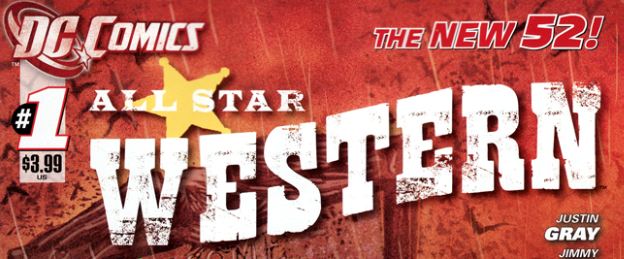
52 mal berührt: All Star Western #1

DC Comics startet sein komplettes Superhelden-Universum neu. COMICGATE trifft sich zum Speed-Dating mit den Erstausgaben aller 52 Serien. Wird es dabei zu heißen Spätsommer-Flirts kommen? Zu wilden Schlabberzungenküssen? Oder bleibt es doch eher beim Austausch lauer Unverbindlichkeiten? Hier ist alles drin, Freunde der Sonne. Folge 46 von 52: ALL STAR WESTERN #1 von Jimmy Palmiotti, Justin Gray und Moritat.

all_star_western

MARC-OLIVER: Das ist eigentlich genau das, was ich erwartet hab, im guten wie im schlechten Sinn: eine weitere Jonah-Hex-Geschichte unter neuem Titel.

Wobei die Story zwar im Wilden Westen spielt, aber eher auf eine Art trashige US-Version von From Hell hinausläuft: Der brutale, kurz angebundene und schlimm entstellte Söldner Jonah Hex wird im Gotham City der 1880er angeheuert, dabei zu helfen, Morde an Prostituierten aufzuklären. Dabei kommt es schnell zu allen möglichen Verwicklungen, mit den üblichen Verdächtigen.

Die Geschichte ist also ein Krimi mit Western-Anstrich, und das deklinieren die Beteiligten routiniert durch. Palmiotti und Gray geben sich mit dem Plot oder den Dialogen keine Blöße, auch die Zeichnungen von Moritat überzeugen. Der Kolorist hat’s mit den Braun- und Grautönen etwas übertrieben – klar, dass es trist und dreckig und rostig und so weiter aussehen soll, aber das geht sicher besser und weniger monoton als hier.

Die Begeisterung, die Jonah Hex Monat für Monat bei seinen ungewöhnlich treuen 10.000 Fans ausgelöst hat, erschließt sich mir persönlich nicht. Aber vielleicht schätzt man ja gerade die unaufgeregte Vorhersehbarkeit und Routine, mit der hier erzählt wird. Ist beim Tatort ja auch so. Mir ist All Star Western sowohl von der Geschichte als auch von der Optik her zu langweilig, es wird aber sicher wieder seine Liebhaber finden. Solide umgesetzt ist es ja allemal.

ZOOM-FAKTOR: 5 von 10!


BJÖRN: Als einer von den 10.000 Fans (okay, ich habe immer auf die Paperbacks gewartet): Das mit der Routine trifft es. Jonah Hex war ein Westerngroschenroman mit netten Zeichnungen. Nichts Weltbewegendes, aber ein Lichtblick in einem ansonsten fast völlig toten Genre. Und ich mag das knurrige, amoralische Narbengesicht irgendwie.

Insofern sollte man bei meiner Bewertung des Comics bedenken: Ich bin Zielgruppe. Hex-Leser, Hex-Fan, Batman-Fan. Und als Zielgruppe bin ich mit All Star Western wirklich zufrieden. Den Kopfgeldjäger aus seinem gewohnten Habitat zu entfernen und ihn ins Gotham City der 1880er zu verpflanzen, bietet einiges an Möglichkeiten. Und das Team-Up des völlig skrupellosen Raubeins aus dem Westen mit dem schwülstigen und potentiell Wahnsinnigen Dr. Amadeus Arkham gibt auch ordentlich Stoff für interessante Geschichten. Wobei diese Geschichte eher Krimi als Western ist: Die verkommenen Stiefbrüder von Sherlock Holmes und Dr. Watson jagen Gothams Jack the Ripper. Und dass die Captions total überzüchtet wirken und die logischen Schlußfolgerungen von Arkham bestenfalls albern sind, sehe ich erst einmal als Anzeichen dafür, dass Gray und Palmiotti den guten Doktor direkt als unzuverlässigen Erzähler aufbauen wollen.

Moritat kenne ich bisher aus den ersten vierzehn Ausgaben Elephantmen, wo mich seine Zeichnungen nicht vom Hocker gerissen haben. Ich kann hier mit Fug und Recht feststellen, dass der gute Mann seitdem einen echten Quantensprung gemacht hat und sowohl Gotham City als auch seine Figuren allesamt sehr gefällig sind. Ich mag vor allem die Ausdrucksstärke seiner Gesichter.

Abzüge in der B-Note gibt es für die leichte Formelhaftigkeit und die Prostituierte, die nur vorgestellt wird, um sie dann umbringen zu können und die Geschichte für Jonah Hex persönlicher zu machen. Das ist etwas, worunter auch die bisherigen Jonah-Hex-Stories bisweilen litten. Dafür versöhnt mich der Blick auf die Geschichte Gothams. Wie gesagt: Ich bin Zielgruppe, man nehme meine Wertung darum cum grano salis, aber mir sagt All Star Western sehr zu. Sogar mehr als die bisherigen Hex-Geschichten.

ZOOM-FAKTOR: 7 von 10!


Bereits im Juni hatte COMICGATE alle 52 neuen DC-Serien vorurteilslos begutachtet und eingeordnet: Teil 1, Teil 2, Teil 3, Teil 4.

Alle Folgen von „52 mal berührt“

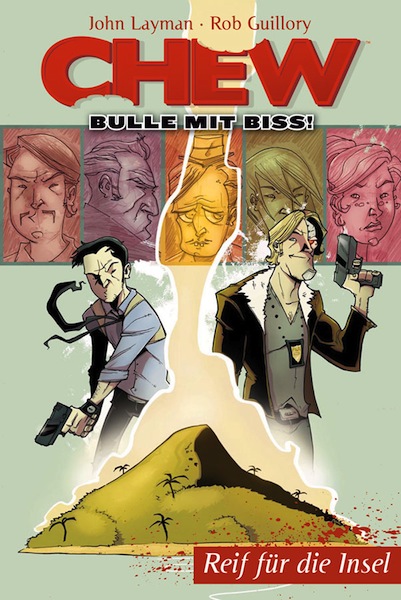
Chew 2 – Reif für die Insel

Cover Chew 2Da haben wir einen Comic, der überzogene Gewaltdarstellungen mit unmöglichen Mördertitten kreuzt, in dem ein riesiger Scheißhaufen prominent in Szene gesetzt wird, Figuren „Hundeficker“ genannt und Gesichter verspeist werden. Und die deutschen Medien überhäufen dieses Machwerk mit Lob. Von Spiegel Online über 3sat Kulturzeit und die Frankfurter Rundschau bis hin zur taz: Band 1 heimste hierzulande begeisterte Kritiken ein. Erklären lässt sich das zum einen mit der clever-originellen Thematik: Ein US-amerikanischer Sonderermittler, dem das Verspeisen von Lebensmitteln (oder anderen essbaren Substanzen) telepathische Bilder von der Vorgeschichte des Genossenen beschert, verrichtet seinen ungewöhnlichen Job in einer Welt, in der nach einer angeblichen Mega-Vogelgrippe mit vielen Millionen Opfern Hühnerfleisch wie Alkohol zur Prohibitionszeit verboten ist.

Mit der Lebensmittel- und Seuchenproblematik rennt Autor John Layman natürlich derzeit weit offene Türen ein. Doch statt moralinsaurer Abrechnung mit unserer aus dem Ruder gelaufenen Nahrungsmittelindustrie hat Layman eine teils unheimlich pulpige, teils aberwitzige Krimi- und Verschwörungsgeschichte im Sinn, die – und dies ist neben der Thematik der zweite große Pluspunkt – wirklich gut zieht. Trotz aller schrägen Einfälle und Abzweigungen, welche die Comicerzählung auszeichnen, steht offensichtlich ein von langer Hand ausgetüftelter Storybogen im Hintergrund, der in Band 2 (in dem die US-Comichefte 6-10 gesammelt sind) viel offensichtlicher wird als noch im ersten Band. Und wie Layman die bizarren Fälle seines „Kannibalen-Cops“ Tony Chu mit Verschwörungsparanoia, Spionage-Elementen, Wirtschaftsintrigen und herrlichen Geschmacklosigkeiten ausschmückt, ist schon eine kleine Kunst für sich.

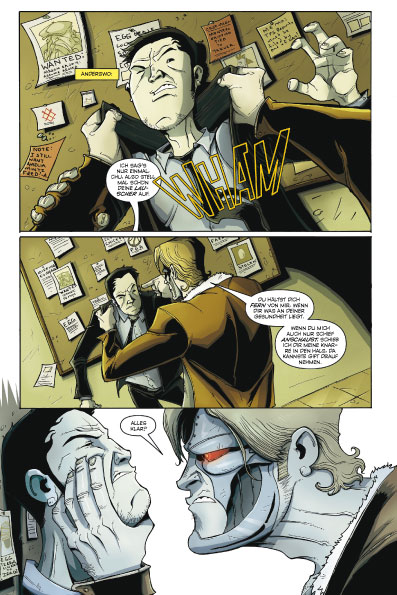
Seite aus Chew 2Bevölkert wird diese Welt, in der man für Lebensmittel mordet, dazu noch von einer Reihe exzentrisch-unterhaltsamer Figuren: Tonys nach einer schweren Verletzung leicht gestörter (Cyborg-)Partner, sein in Regierungsungnade gefallener Ex-Starkoch-Bruder, die von ihm angebetete Restaurantkritikerin Amelia, welche mit ihren Textkritiken körperliche Reaktionen beim Leser auszulösen vermag oder sein bösartiger Vorgesetzter, der hier in einer überraschenden und witzigen Szene eine ganz neue, menschliche Seite offenbart, sind bereits aus Band 1 bekannt. Dazu kommen in den vorliegenden Comicepisoden, in denen es den Ermittler auf die Pazifikinsel Yamapalü verschlägt, noch ein durch Speisen kommunizierender Kochkünstler, ein Inselgouverneur mit großer kulinarischer Vision, eine anatomisch unglaublich gebaute Agentin und ein schlitzohriger Lokalpolizist. Und selbst eine Figur, die im ersten Moment im falschen Genre gelandet zu sein scheint, fügt sich letztendlich perfekt in die Welt von Chew ein. Wer von ihnen letztendlich Teil der fortlaufenden Handlung bleibt und wer unverhofft aus der Geschichte geschrieben bzw. gemordet wird, lässt sich dabei erfreulicherweise kaum absehen.

Figuren und Erzählung hätten aber wohl nur halb so wenig besonderen Appeal, wenn nicht auch der Zeichenstil in gewissem Maße über die Stränge schlagen würde. Die ständig nah an der Karikatur schrammenden, nie schönen, aber auf ihre Weise ungeheuer anziehenden Zeichnungen von Rob Guillory, der wirklich ein Händchen für starke Mimik und kunstvoll überzogene Posen hat, sind für den Erfolg von Chew ebenso wichtig wie Laymans smarte Schreibe. Nicht vorzustellen, wie viel dem Comic verloren gegangen wäre, wenn er statt mit Guillorys Indie-Schick im glatt-attraktiven Mainstream-Look oder einem düster-kritzeligen Vertigo-Stil dahergekommen wäre.

Um den Rezensionskreis zu schließen: Schön, dass dies alles auch über die Comicszene und deren spezielle Medien hinaus erkannt und verkündet wurde. In den USA dürfen sich die zahlreichen Redakteure, die Layman früher mit seinem Storykonzept weggeschickt und schließlich zur Selbstfinanzierung seines Projekts getrieben haben, zu Recht herzhaft in den Hintern beißen.

 
Wertung: 9 von 10 Punkten

Abermals äußerst gelungene Paarung aus smartem Pulp-Verschwörungskrimi, herrlichen Geschmacklosigkeiten und eigensinnig-attraktiven Indiezeichnungen


Chew – Bulle mit Biss 2: Reif für die Insel
Verlag: Cross Cult
Text: John Layman
Zeichnungen: Rob Guillory
128 Seiten, farbig, Hardcover
Preis: 16,80 Euro
ISBN: 978-3-942649-19-3
Leseprobe

 Jetzt beim Fachhändler Comic Combo anschauen und bestellen!    Jetzt bei amazon.de anschauen und bestellen!

Abbildungen © John Layman/Rob Guillory, der dt. Ausgabe: Crosscult

links

Interview mit John Layman
Interview mit Rob Guillory

Disclosure/Klarstellung: Die deutsche Ausgabe von Chew 2 wurde von den CG-Redakteuren Marc-Oliver Frisch und Frauke Pfeiffer übersetzt bzw. lektoriert.

52 mal berührt: Blackhawks #1

DC Comics startet sein komplettes Superhelden-Universum neu. COMICGATE trifft sich zum Speed-Dating mit den Erstausgaben aller 52 Serien. Wird es dabei zu heißen Spätsommer-Flirts kommen? Zu wilden Schlabberzungenküssen? Oder bleibt es doch eher beim Austausch lauer Unverbindlichkeiten? Hier ist alles drin, Freunde der Sonne. Folge 45 von 52: BLACKHAWKS #1 von Mike Costa, Graham Nolan und Ken Lashley.

blackhawks

BJÖRN: Mike Costa schreibt G.I.-Joe-Comics, auch wenn DC keine Lizenz für G.I.-Joe-Comics haben mag. Alle Figuren in diesem Comic wirken, als wären sie Figuren aus einer 80er-Jahre-Zeichentrickserie, die dazu gedacht ist, Spielzeug zu verkaufen. Aber gefangen im Körper einer Image-Serie aus dem Jahre 1992. Der Comic beginnt mit der Vorstellung der dummen Rufnamen der Figuren (The Irishman, Wildman, Attila), der Welt schlechtester Weltkarte (die die Frage aufwirft, ob Nolan und Lashley einfach keinen Globus besitzen oder ob das Nachwirkungen von Flashpoint sind) und einer Actionszene, bei der ich keine Ahnung habe, gegen wen die Blackhawks gekämpft haben oder warum. Nolan mag gute Layouts vorgelegt haben, aber die Finishes von Ken Lashley sind außergewöhnlich schlecht.

Danach taucht ein UN-Abgeordneter im Hauptquartier der Blackhawks auf, da jemand das Helikopter-Logo der streng geheimen Supertruppe fotografiert hat. Damit hat der Comic auch jemanden, dem man eine Dosis Infodump verpassen kann, und um Leser wie mich auszulachen, weil wir den Irishman klischeehaft finden. Dabei ist er doch UKRAINER! Ein irisches Klischee aus der Ukraine ist kein Klischee mehr! So wie ein russischer Cowboy (aus Leningrad) oder ein Lederhosen tragender Engländer. Egal. Die eine Lady im Comic entwickelt Superkräfte, weil sie mit Naniten infiziert wurde oder sowas und … halt, Moment mal! Mir wird gerade was klar: Warum druckt eine streng geheime UN-Soldatentruppe eigentlich ihr Logo auf ihre Fluggeräte?

Das ist eine Frage, über die ich weiter nachdenken würde, wenn mir Blackhawks nicht in Wirklichkeit so unglaublich egal wäre. Anders als bei Legion Lost kann ich mich hier nicht einmal aufraffen, Gift und Galle zu spucken.

ZOOM-FAKTOR: 1 von 10!


MARC-OLIVER: Bei Hawk & Dove und The Savage Hawkman dachte ich schon, dümmer geht’s nimmer, aber wie nun Blackhawks unter Beweis stellt, geht es doch irgendwie immer noch dümmer. Doch halt … Ich glaube, ein Muster erkennen zu können. Der Internationale Verband der Falkner sollte vielleicht mal überlegen, bei DC Beschwerde wegen Verunglimpfung einzureichen.

Du beschreibst das Konzept der Serie schon sehr treffend. Ob die Layouts von Graham Nolan so toll sind, weiß ich aber auch nicht, denn es gibt mindestens zwei Szenen in dem Comic, bei denen es mir völlig schleierhaft ist, was sie mir vermitteln sollen. Vermutlich kam es Ken Lashley auch nicht so sehr auf die erzählerische Komponente an, sondern eher darauf, das vermaledeite Ding endlich rechtzeitig fertigzubekommen. So sieht der Comic nämlich aus.

Autor Mike Costa indes gibt offenbar nichts auf Dinge, die man nicht sehen oder erschießen kann. Wie zum Beispiel die Logik. Topagentin wird im Einsatz gebissen, weigert sich anschließend, die Wunde behandeln zu lassen. Streng geheime Organisation pflastert Uniformen und Gerät mit stylischen Logos. Kommandant empfängt einen UN-Vertreter in voller Kampfmontur und mit rot getönter Sonnenbrille – tief in irgendeinem geheimen Bunker. Hätte David Bowie in den 1980ern eine Captain-Future-Phase gehabt, hätte er sich genau so zurechtgemacht. Den Gag mit dem Iren, der eigentlich Ukrainer ist, fand ich eigentlich total lustig, aber auch nur so lange, bis Costa den Rest der Seite darauf verwendet, ihn mit ungeniert schlechter Prosa totzusezieren. Pointen sind wohl auch nicht so sein Ding.

Nein, es gibt wenig, das man Blackhawks zugute halten könnte. Die Zeichnungen sind bestenfalls genießbar, die Story ist doof, die Figuren am doofsten und die Texte von einer bedauerlich unspektakulären Beschissenheit. Wenigstens kommt nun bei den restlichen Heften nichts mehr mit Federvieh im Titel, das Gröbste dürften wir also überstanden haben.

Was natürlich kein Grund zum Aufatmen sein muss, wenn gerade der Durchfall herrscht.

ZOOM-FAKTOR: 1 von 10!


Bereits im Juni hatte COMICGATE alle 52 neuen DC-Serien vorurteilslos begutachtet und eingeordnet: Teil 1, Teil 2, Teil 3, Teil 4.

Alle Folgen von „52 mal berührt“

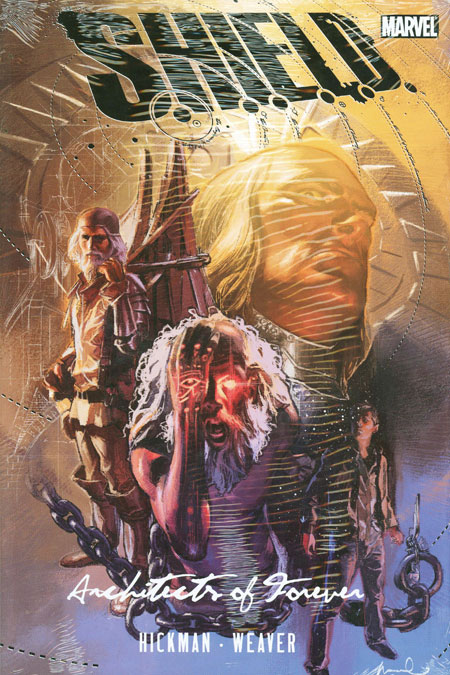
S.H.I.E.L.D. – Architects of Forever (US)

Cover S.H.I.E.L.D. – Architects of ForeverS.H.I.E.L.D. – Architects of Forever sieht umwerfend aus. Einfach nur umwerfend.

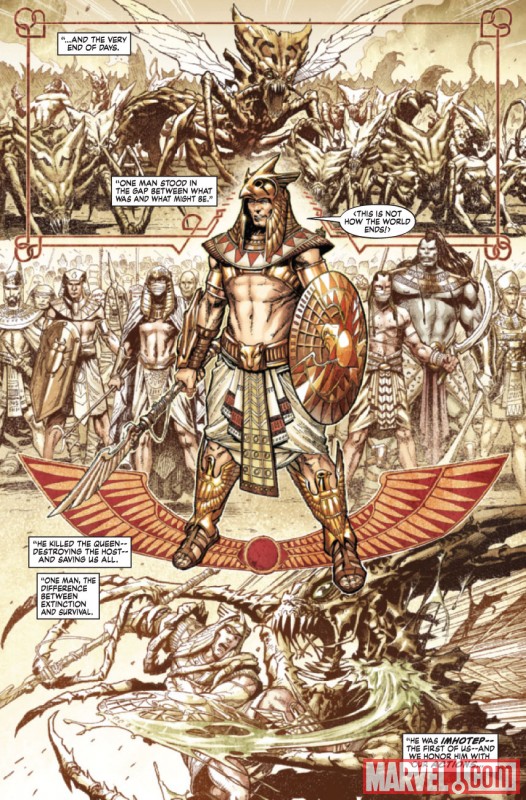
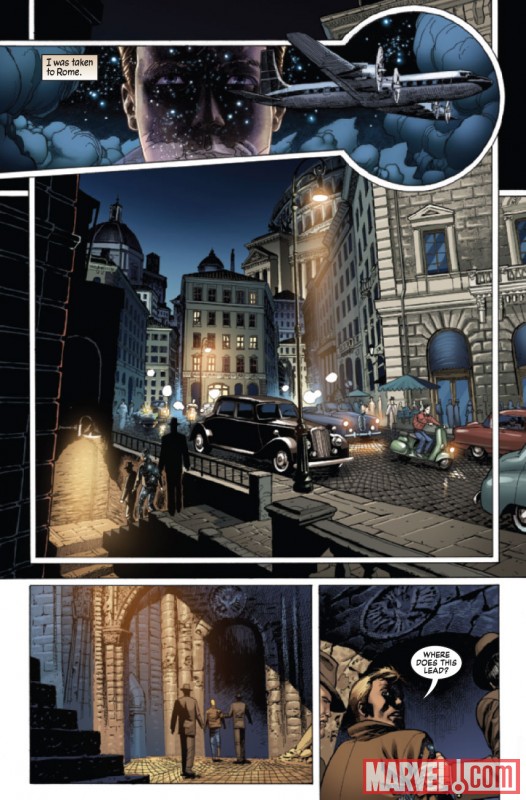
Was Zeichner Dustin Weaver und seine Koloristin Christina Strain hier auf die Seiten zaubern, gehört zum allerbesten, Was ich seit Jahren in Superheldencomics gesehen habe. Wir reden hier von einem Niveau, das es mit Bryan Hitchs Zeichnungen in The Authority und The Ultimates aufnehmen kann und das nur marginal weniger grandios ist als das Artwork von John Cassaday in Planetary. Von riesigen Celestials im Alten China über Steampunkmaschinerie und ausladende Doppelseiten, auf denen futuristische Ruinen oder unterirdische Städte dargestellt werden, bis hin zu Galactus im Rom des 16. Jahrhunderts und Leonardo da Vinci, der als Astronaut die Sonne inspiziert – das alles bringt Weaver so gekonnt aufs Papier, dass es ein Augenschmaus ist. Und dass er nebenbei auch noch groteske Monster oder bedrohliche Aliens entwerfen und Actionszenen Dynamik sowie Gesichtern Ausdruck verleihen kann, rundet den hervorragenden Gesamteindruck nur ab. (Einzige Erbsenzählerei: Das Monumento Vittorio Emanuele II sollte im Rom des Jahres 1582, also rund 250 Jahre vor der Geburt Viktor Emanuels II., ganz eindeutig noch nicht zu sehen sein.) Wenn man also Architects of Forever zu kaufen gedenkt, dann sollte man die paar Euro mehr ausgeben und zum überformatigen Hardcover greifen, in dem Weavers epische Zeichnungen erst so richtig zur Geltung kommen.

Seite aus S.H.I.E.L.D. – Architects of ForeverLeider kann ich meine Begeisterung für Dustin Weavers Handwerkskunst nicht auf Jonathan Hickmans Skript übertragen. Hickman erzählt die Geheimgeschichte des Marvel-Universums und interpretiert dabei S.H.I.E.L.D. als einen Geheimbund, der gegründet wurde, als Imhotep im dynastischen Ägypten eine Invasion außerirdischer Käfer abwehrte und in dem seither regelmäßig der Geschichte größte Männer (die Frauenquote des Comics ist eher gering) die Welt vor kosmischen Bedrohungen bewahrt haben. Das ist als Idee nicht mehr ganz so unverbraucht, wie es noch vor ein paar Jahren war (Matt Fractions Five Fists of Science kommt mir in den Sinn und wird von Hickman auch im Comic referenziert), aber es ist trotzdem ein Spielbrett, auf dem sich ein guter Autor richtig schön austoben kann. Tim Powers hat schließlich seine ganze Karriere auf Romanen dieser Art begründet.

Das Problem ist, dass Hickmans Geschichte völlig überwältigt wird von der epischen Breite seiner Vision und dem Bedürfnis, eine eigene Philosophie und Kosmologie in diesem Rahmen zu verbreiten. Hickman tappt in jene Falle, die Erzählungen dieser Art oft mit sich bringen: Statt seinen Figuren eine ordentliche Charakterisierung zu verpassen, verlässt er sich darauf, dass man ja weiß, wer Leonardo, Newton oder Nostradamus ist. Damit scheint es für ihn auch akzeptabel, einfach dutzende Figuren in kurzer Folge auf den Leser loszulassen. Aber auch die Figuren, die er eigens für diese Geschichte einführt, bleiben blass und persönlichkeitslos.

Seite aus S.H.I.E.L.D. – Architects of ForeverDas zweite Problem ist Hickmans Bedürfnis, dem Leser seine Gnosis für das Marvel-Universum vorzustellen und ihn in einen philosophischen Zwiespalt zwischen Newtons Determinismus und Leonardos Idee der Grenzenlosigkeit des menschlichen Potentials einzubinden. Beides ist einfach längst nicht so spannend und interessant wie Hickman zu denken scheint. Ein ordentlicher Plot, der sich etwas weniger gemächlich voranbewegt, würde dem Comic gut zu Gesicht stehen. Stattdessen verkommt Architects of Forever viel zu oft zu einem Traktat mit überfrachteten Captions.

Dabei bietet die Story selbst viele Möglichkeiten: Hickman schafft es immer mal wieder, tolle Ideen in seine Geschichte einzuweben. Dass Papst Gregor den gregorianischen Kalender einführte, um jene zehn Tage, in denen Galactus Rom in Schutt und Asche legte, aus dem kollektiven Gedächtnis zu streichen, ist ein Musterbeispiel dafür, wie gut Architects of Forever in den besseren Momenten funktioniert. Es sind solche Ideen, ein paar der epischen Szenen und vor allem die Zeichnungen Dustin Weavers, die mich in Architects of Forever in Atem halten. Die Faszination des Comics basiert auf der Frage, welche Momente der frühen Marvel-Geschichte uns Hickman noch in einem neuen Licht präsentieren und welche grandiosen Zeichnungen uns Weaver noch kredenzen wird. Es ist leider nicht das Interesse an der Geschichte selbst oder an den vorgestellten Figuren, die mich für den zweiten Band zurückholen wird.

Insofern ist Architects of Forever leider nur das bestaussehende Mittelmaß der letzten zehn Jahre.


Wertung: 6 von 10 Punkten

Großartige Zeichnungen, hochinteressante Ausgangsidee, mittelmäßige Story


S.H.I.E.L.D. – Architects of Forever
Marvel Comics, Mai 2011
Text: Jonathan Hickman
Zeichnungen: Dustin Weaver
192 Seiten, farbig, Hardcover
Preis: 24,99 US-Dollar
ISBN: 978-0785148944
Leseprobe

Jetzt bei amazon.de anschauen und bestellen!

Abbildungen: © Marvel Comics

Interview with Robert Venditti and Brett Weldele

The movie The Surrogates, starring Bruce Willis, will be shown in Germany at the beginning of next year. It is based on the comic of the same title. The single issues were collected and released as a TPB in the States in 2006 while the foreign editions have been published not until this year. The German publisher, Cross Cult (which is also licensee of the German issues of comics such as Sin City, Hellboy, The Walking Dead, and The Umbrella Academy), invited writer Robert Venditti and artist Brett Weldele to the Frankfurt Book Fair and a short signing tour.

On October, 16th, Comicgate’s Andreas Völlinger and Frauke Pfeiffer had the pleasure to interview the two gents who have never been to Europe before …

[Hier geht es zur deutschen Version.]
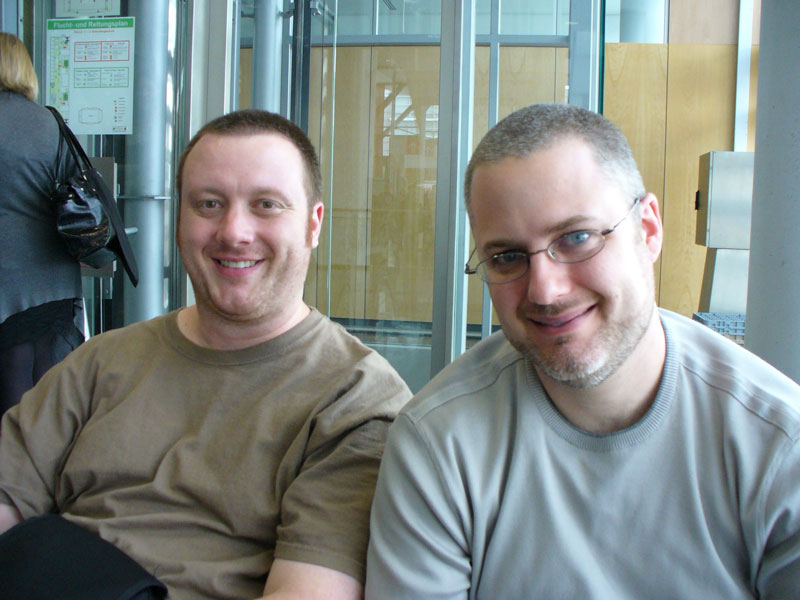
brett_and_rob_comicgateAndreas: Okay, Robert and Brett, let’s start this interview. Is it kind of strange to promote a book that is … how old? Four years?

Robert: Yes, the single issues came out in 2005.

AV: So, that was the first time you had to talk about it and promote it. But now you are back on the track because of the international editions and the movie. Is it kind of strange or hard for you to do this again?

RV: No, actually there were the doldrums in there where it got a little bit redundant in these in-between years, where there wasn’t really a lot going on with the book. And since this was the only book I’ve done, on conventions I was telling the same things all over again. But this year is really energizing. Not just with the movie but also with the foreign editions. And we also had the new prequel come out, „The Surrogates: Flesh and Bones“. And we are promoting that as well. It’s a lot of fun.

AV: So, you enjoy being in Germany, going to book fairs and doing interviews?

RV: I love talking about myself. (laughs)

AV: And what about you Brett?

Brett: Well, Rob is mostly known for The Surrogates but I had new books coming out over the last years so it’s different for me. And I don’t promote like Rob does.

AV: But you kind of enjoy the ride?

BW: The ride has been great. It’s been kind of surreal …

AV: So, where are you going next after your stop in Germany? Are there any other places in Europe?

RV: Yes, we are going to France. We are doing a neat little book tour in France and then we go for one day to Brussels. And after that we go to Italy for the Lucca Comic Book Festival. So altogether it’s gonna be 18 days. And what you were saying before about me doing all the PR stuff … I don’t know if you guys know but I actually work for the publisher of The Surrogates. [which is Top Shelf]

Frauke: We’ve read that you started out in their mailroom …

RV: Yes, I started out in the mailroom. But I still work for the company today. I see the editor every day and we talk all the time, so it’s just very simple and an easy transition. And a lot of times I’m talking on the phone with someone else and then he realizes that I’m also the guy who wrote The Surrogates and then we talk about that


AV: Is it kind of difficult to switch roles between being writer and company man?

RV: It’s actually very beneficial. Because most of what I do at Top Shelf is selling directly to all the comic shops in America and even overseas. We sell to a lot of shops in Belgium, in France, the UK … And I do all the invoicing and that kind of stuff. I wrote the book in 2002 and it did actually come out in single issues in 2005. During that three-year-interim I was talking to retailers everyday on the phone. So when my book came out, I was on a first name basis with all the retailers all over the country. That really helped a lot. And I also worked at conventions – not as classy as this one – but at comic book conventions in America. And all that time I was reading all the comic book press. So when the time for my book came I already knew all of these people.
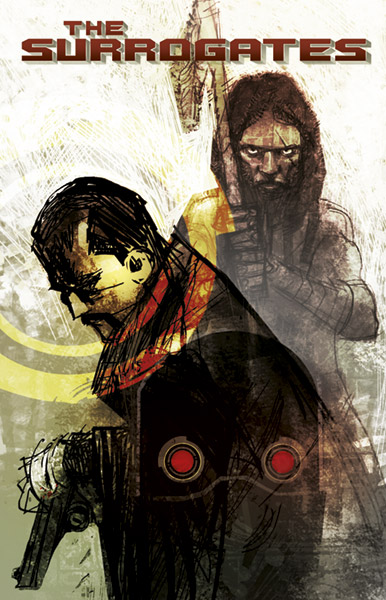

thesurrogatesAV: Let’s talk about the writing process. You wrote the script without having an artist attached to the project, without having a publisher, although you were working at one. Were you just doing it for fun or did you kind of hope to get it in there somewhere in-between?

RV: I definitely wanted it to get published. I went to school to be a prose writer. I wrote short stories. And I’ve never read comic books growing up. I don’t know why, I just never did. In 2000 I read my first comic book and I decided I was gonna write them.

FP: What comic book was that?

RV: Astro City Vol. 2 No. 4. The first issue of the „Confessor“-story-arc. A friend of mine told me to read that story because he knew I had an interest in religion – which you can see in The Surrogates. And this story-arc is about a priest who is also a vampire. That is, by the way, the hugest spoiler of the whole arc. (laughs) So I read that and I really liked it and I was struck by the complexity of the story and the characters. What I’ve been trying to do in my fiction writing … There were two different kinds of writing. There was literary fiction which was based on characters and there was genre fiction which was based on plot. And I thought comic books were just genre fiction, but when I saw this was a really character-based story I decided that’s what I wanted to do. I had no idea how to do it, I had no artist, I was working in that mailroom. I just did what I felt was right.

AV: How did you learn the ropes? Did you study other comic books? I mean, writing a comic book script is different from writing a movie script for example …

RV: There wasn’t a lot of resources at that time. But now you can go to the bookstore and there are a million books about writing for comics because comics are cool now.

AV: Like „Writing for Comics with Peter David“ or the one by Denny O’Neil [„The DC Comics Guide to Writing Comics“] …

RV: Or „The Idiot’s Guide to Writing Comics“. Back then there wasn’t much. I started to study the Will Eisner books „Graphic Storytelling“ and „Comics & Sequential Art“ and I sort of did what, I felt, came naturally. So when Brett did come onboard, which was a year after I finished writing it, I told him upfront, „I’m not an artist, this is my first stab at this. If you got a better way of doing it, then do it. If you want to change angles or other kind of things, go ahead.“ I was very, very detailed in the script.

AV: Yes, I read the example script pages in the German edition.

RV: Yes, it was very long. I think that was born out of my habit of writing prose. Even in prose I write very long and detailed. I didn’t know who the artist was going to be and whether he had a sketchier style, like Brett does, so that he wouldn’t need all the details. When we did „Flesh and Bone“ I think I paired it down a lot. Because now I know it’s Brett.

FP: I guess that in the US, like in Germany, you can’t really earn money with a book at a small independent publisher. So did you do it for the art? To just get this comic book made?

RV: I was in the position where I had a fulltime job. So I didn’t need to do it for the income. But I did want to have a career start and see if I could make a living at it. Knowing that with any form of the arts you are not just gonna hit the ground running, I kept my fulltime job. One time I was working fulltime at Borders, forty hours a week in four days, on my three days off I would pack boxes at Top Shelf, and I was writing The Surrogates at night. That’s how I wrote the book. I was doing all that at the same time. But because I had those other jobs I did never have to take a writing job just because I needed the paycheck.
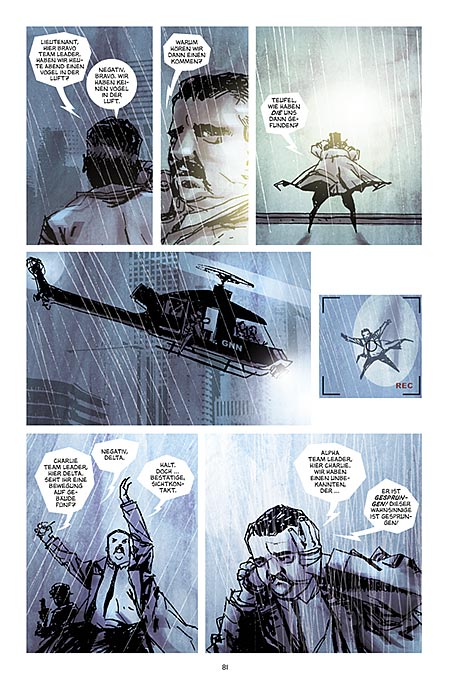
thesurrogates1FP: Did you kind of see it as a hobby or did you really want to take the chance to become a professional?

RV: I definitely did. I even got permission from my wife first. I did want to become it a career. But I don’t know if you are familiar with Top Shelf’s books. They do mostly black and white art-style indie comics. The Surrogates was their first mainstream book. So I knew already from the beginning we were going with one foot in the grave and one in the banana peel. It was a mainstream book coming from an independent publisher. So we had none of the street credibility and none of the audience either.


FP: You never had the intention to publish it somewhere else?

RV: No. Chris [Staros, Top Shelf publisher] told me upfront, „If you like to do the book somewhere else I will introduce you to another publisher and they will pay you more money. But you won’t own it or won’t own it as much or won’t control it as you do by publishing it here.“ Because I had another job and I had money coming from somewhere else I didn’t need it to come from there.

FP: So this is a truly creator-owned comic?

RV: Yes. I signed my publishing deal with Top Shelf for 300 Dollars. That might be what Siegel and Shuster got for Superman.


FP: So they paid you 300 Dollars and then you got a share from the sales?

RV: Right. Because I went with Top Shelf, I own it. Whatever happens with the book I participate financially in that. When the movie was made I got the money, when the rights to publish it in Germany were sold I got it. And I also get royalties on the books. Personally I don’t like getting a big advance. I don’t want a big advance and then I have to earn that out. That’s like I’m digging out of a hole. I’d rather have no money upfront and know that the money is still coming to me.
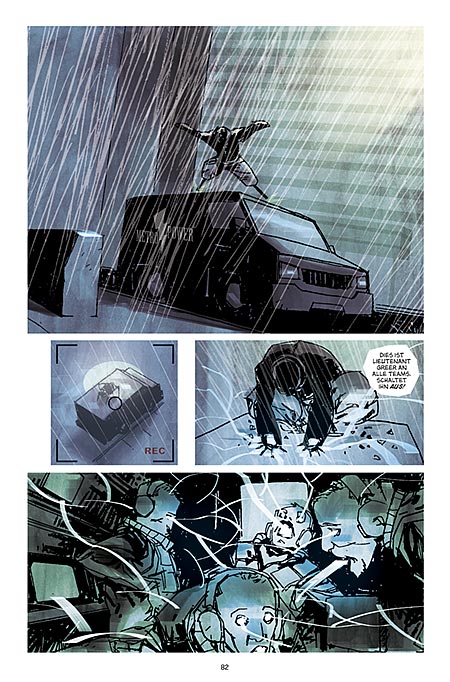
thesurrogates2AV: Brett, when you were introduced to Robert and his work, what convinced you to draw it? Did you think „This has potential.“ or „This suits my style.“?

BW: Well, I was first approached by Chris Staros and I know him since I went to college.

AV: So you kind of trusted him on this?

BW: Yes. I had grown a relationship with him over three or four years and when he emailed me one day and asked me to do The Surrogates I agreed.

AV: Let’s get to the movie adaption. I’ve noticed some plot changes in the movie script. I haven’t seen the movie yet, but I’ve read about it. What do you think about these changes? I’ve read that you were a kind of an advisor to the script people …

RV: Not really. I mean, I was a consultant, but I don’t want to overstate my involvement. We were involved in it to the extinct that we knew what was going on. We talked to the producer, we went to visit the set and all that, but we weren’t involved in the controlling.


FP: Did you completely sell the rights for the movie?

RV: Yeah. I never wanted to be involved. I always felt like if they wanted to invest their time and energy doing something with my story then let them bring their creativity to it and have fun with it and do what they want to do. The book already exists. I’ve already told the story the way I wanted to tell it. If this was a screen play, and my screen play got bought and got rewritten 47 times and turned into something completely different so that my original story did not exist anymore, that would be different. But my story is there. So it doesn’t bother me, it doesn’t change anything.

AV: After you’ve seen the movie for the first time, did you feel that it served your story well? Is this still The Surrogates or is it something different with just some ideas taken from your book?

RV: I feel like it’s still the same, it’s still The Surrogates. The themes are there, the majority of the characters is there, the marriage between Harvey and his wife is translated to the screen very well. And that was always my favorite part even though it’s only about ten pages of the book. I always liked that part the best because I think this is really what humanizes the whole story, you know. So that translated to the film perfectly.

AV: Even though Bruce Willis doesn’t exactly look like Harvey, he is the right guy for this role, isn’t he?

RV: Yes, I always thought that from day one. When I was writing it in 2002, my wife and I were talking and we were like: If they are ever going to make a movie out of this, who would be good for the part? And we both said „Bruce Willis“. I mean, he’s perfect.

AV: Did you meet him?

RV: Yeah. We both did.

FP: Soon there’s a another movie coming out with a similar subject, James Cameron’s Avatar

RV: I didn’t know about that. But there’s a lot of movies like that right now. I think ideas just have their time, you know. Gamer was also kind of similar for what I understand – it wasn’t Surrogates necessarily, but it was about remote controlling of the bodies. There was another movie called Sleep Dealer. It’s an independent film in America and it’s about …

BW: That’s a Mexican film.

RV: It was remade, though, wasn’t it? Didn’t they change the name? (Rob and Brett discuss) Anyway, it’s a Mexican film but it was also shown in America. It’s about Mexican immigrants who … Today, they do a lot of agriculture work and things like that in America, but there’s this whole debate about immigration and all these kind of things. It’s a big political issue right now. So what this movie does: It keeps all the Mexicans in Mexico and they work their agricultural jobs through robots remotely across the countries, you know. So it’s also a very similar theme. And even technology itself, whether it’s Second Life or … I think Sweden is working on a technology where a doctor can connect remotely to a robot in another city to perform a surgery. So even technology is coming to pass. Sometimes, these ideas just happen. If Tesla and Marconi could invent the radio independently from each other at exactly the same time, just about anything can happen.

AV: You’ve already mentioned „Flesh and Bones“, the prequel to the first book of The Surrogates

RV: Yes, it’s set 15 years before the first book. I wrote it in [looks at BW] … 2008? And it just came out in July.


AV: Are there more stories that you want to tell?

RV: There are three more that I like to do still. I’m hoping to start the next one propably December this year.

AV: Brett, will you be on board for these?

BW: Yeah.

AV: What will it be about?

RV: I don’t really wanna say yet. Brett’s the only one who knows how the story ends. So if I ever hear about it, I know where it came from. (grins towards Brett)

AV: Is this a prequel again?

RV: No, no. You got the first book, then a prequel. I’d like to do two books between the prequel and the first one. And then one book that comes after the first book.

FP: So it’s like Star Wars

RV: Yeah, I know, it’s confusing. (laughs)


FP: When they ar
e all published, how would you suggest to read them – still in the same order they were published?

RV: Yeah, in this order. You really need to read the first book before you read the prequel. In the first book when they are talking about their marriage, you see what effects the Surrogates have. In the prequel you see Marga bringing her surrogate home for the first time. And Harvey is very excited about it because his wife got a different look and it’s like he is with a different woman but it’s still his wife. It teams with the sadness because you know what happens to them in the future so I think you really need to read the first book before you read the prequel.

AV: Brett, you also worked on Southland Tales with Richard Kelly who did Donnie Darko, which is the movie most people associate him with. How was working with him in comparison to other writers, Rob for example? I mean he comes from the movies. I’ve read that he was kind of exhausted by doing the comic book script.

BW: He comes from film and not comics, but he wanted to do comics. He gave me pretty as much freedom as I wanted. He basically just handed me a movie script. When I got involved with it, filming for Southland Tales hadn’t begun yet. He was still casting. So most of the first book was done without any film at all. We kept progressively working and I would see stills from what they were shooting and what they were doing, so I did integrate that into the book. So basically the prequel that we made was sort of a road movie to get to the film. It’s an interesting project because you don’t see whole lot of things that are genuinely different media that really almost needs to be both viewed to get a better picture of the whole thing. Like you can watch the movie on its own and you get the most of it. But a lot of the back story and the character development really happens in the graphic novel. So if you don’t get that, you don’t get a richer viewing experience. Richard was an awesome person to work with. Really a great guy, lots of great ideas, he was always open to whatever I wanted to do with it.

AV: Since this was kind of a dystopian science-fiction story, too, are you a kind of genre fan?

BW: Yes, I love this dystopian sci-fi, I love a lot of genre stuff. I mean, I’m primarily a genre guy.


AV: You prefer working in that part of comic books?

BW: Yes, I love genre. Whether it’s noir or samurai, whatever. There’s always some sort of take that I wanna have on some sort of genres.
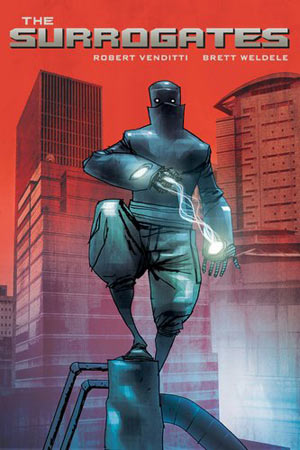
surrogates1_cc_limitiert 

FP: Is the German edition of The Surrogates very different from the US book and do you like it?

RV: Oh yeah, it came out great. It’s the same content, but there is an interview with us in the back. I think otherwise it has the same dimensions. And we love hardcovers! I found it very humbling that another publisher in another country would publish the book. To see it in a different language … this really gives you a sense of being larger than life …


AV: So were you reading it out loud in German and laughing about it?

BW: (laughs) We wouldn’t even try.

RV: There is a French, Spanish, German, Portuguese, Italian, and Belgian version. So there are six different languages besides English.

AV: Do you have them all at home?

RV: No, because a lot of them are coming out like in the next couple of weeks. I saw the German one today for the first time.

FP: I’ve downloaded the first chapter of The Surrogates for the iPone. With this in mind, what do you think about digital comics? Is it okay for you to see your comic on such a small screen or would you prefer that people read it as a book?

RV: I think iVerse – the company that did the Surrogates one … I mean, we’ve talked to a lot of companies about this one. And this is the company which I like the best because they weren’t trying to do motion comics where the word balloons are coming out of people’s mouths and such gimmicks. You aren’t waiting for the refresh rate because you have all this other stuff in there. It’s very quick. You can control the pace of reading, and it’s still static which is what comics is. When you put things in motion, you’ve got film. I liked all that about it. What I think is interesting: You’re taking a story that was made to fit a page and you’re cutting it up and you’re looking at it in a different way. A lot of what writing for comics is, is that you’re dealing with page turns and page breaks and all these kind of things. So a lot of this stuff gets lost in that. What I think would be very interesting is when people start writing comics specifically *for* the iPhone and maybe then they’ll get put in print later. If the iPhone comics will be first, what will those comics be like and how would that change the format, and how will they make use of the way the print makes use of page breaks? … I’m not tech-savy enough to know these answers but that will be interesting. I think it’s cool to have it.

FP: So you’re not unhappy with it?

RV: No, no. It wouldn’t have happened if we wouldn’t have signed the papers.

surrogates_iphone_comicgateAV: Brett, do you feel like they were deconstructing your page layouts? Because it’s another kind of sequential reading.

BW: It’s a little different. I generally design in a teared fashion so it’s very easy to break that off. I purposely don’t do very flashy layouts. I always just use square panels, almost retro. It’s more about what’s going on in the panel. The shape and all the crazy designs that you see in many contemporary comics – I don’t know how you would fit that in there. I think the iPhone is a really interesting device as we look forward to it as a storytelling device in its own right. And then there are all the tablet readers that we are seeing coming out inspired by the Kindle. There will be work that will only be published for those formats. I think it’s pretty exciting, actually.

FP: Well, many people say they need to feel the paper when reading and I can understand that.

RV: Yeah, I feel that way, too. But I wonder … Well, our children are going to grow up in this world. I mean, it’s a completely different world for them. So I think a lot of this is generational.

FP: Can you imagine yourself doing webcomics and then selling printed TPBs later?

RV: Me personally, I want to stick with print. Maybe I get left in the dust at some point by all these young upstarts doing their internet webstuff, whatever … I don’t know. I guess the Zuda stuff isn’t too bad. But most of them aren’t stories, really. They are just gags or three-panels …


AV: What are your projects for the future? I guess both of you got solo works coming out.

RV: I have an Iron Man story that just came out on Wednesday. I haven’t seen it yet because I was travelling. It’s just a one shot. Right now I am working on an adaptation of Percy Jackson & The Olympians. They’re making a movie out of it. I’m turning the novels into graphic novels. And then I’m getting ready to start on the new Surrogates book.

BW: I’m working on a short horror miniseries with the writer of the Image Comics series Olympus [Nathan Edmondson]. We’re doing sort of a John-Carpenteresque horror book, pretty low-level horror.

AV: When will it come out?

BW: I don’t know yet.

AV: By the way, isn’t Percy Jackson Disney-owned?

RV: Well, the movie is not, but the books are from Hyperion which belongs to Disney. They didn’t know anything about The Surrogates. When I met the editor he didn’t know anything about it. This was in February, so there weren’t any trailers yet. I didn’t get the job through The Surrogates.

FP: If you had the choice, you would choose working on creator-owned stuff over working on company-owned characters, I guess.

RV: I think a balance is good because … Work for hire gives you a nice paycheck and that can help float while you are doing the creator-owned stuff where you don’t get a big advance. So I think that’s a nice balance.


FP: What about you, Brett?

BW: I do a fair amount of both. I also do a lot of licence stuff.

brett_and_rob_comicgate2FP: And you don’t mind that?

BW: No. It really depends on what it is and who the licenser is. Those could be very problematic getting stuff approved. But if it’s a very cool working environment, then I have no problems with that. I kind of like it.

RV: I find it freeing in some ways because you don’t feel like you’ve got your baby in your hands. I mean, with The Surrogates it’s always like „I don’t want to mess this up“ while if you’re doing somebody else’s thing, in the worst case it’s just losing a job.


Comicgate: Rob and Brett, thank you very much for taking your time even though you just landed a few hours ago here in Frankfurt! Have a nice trip through Europe.


Related links:

Buy The Surrogates at Comic Combo Leipzig, bei Amazon.de

Review at Comicgate (German)

Cross Cult (German Publisher of The Surrogates, you can find an excerpt there)

Robert Venditti at Top Shelf

Video trailer for „The Surrogates: Flesh & Bone“

Brett Weldele’s Website

Movie Website


pictures © F. Pfeiffer/comicgate.de

Interview with Scott Tipton and David Messina

US writer Scott Tipton is known for several Star Trek, Angel and Spike comic books as well as for his website comics101.com, where he publishes comments on the history of American comics. His frequent collaborator, the Italian David Messina, is a fan favorite Star Trek artist. Together they worked on comics like Star Trek: Mirror Images [Spiegelbilder] und Star Trek – The Next Generation: Intelligence Gathering [Tor zur Apokalypse], published in Germany by Crosscult. David Messina is also the artist of Countdown, the official prequel of the new Star Trek movie.

Andreas Völlinger interviewed the two comic book artists in November at the Fantasydays in Düsseldorf while a wild cosplay show took place in the hall right below the press room.

[Hier geht’s zur deutschen Version.]  


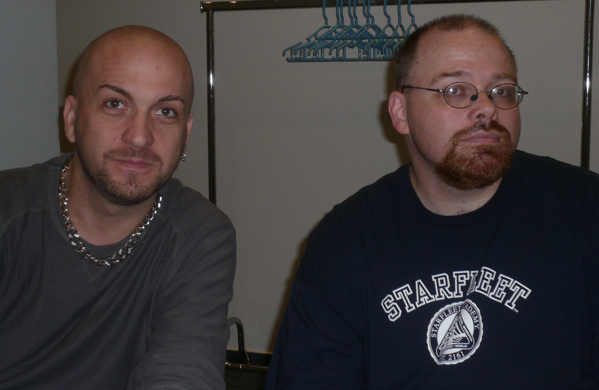
messina_tipton

Comicgate: Alright, I’m here with Scott Tipton [right on photo] and David Messina [left on photo]. Scott, you are from the United States, but which part exactly?

Scott Tipton: From Los Angeles.

CG: And David, where in Italy do you live?

David Messina: Rome.

CG: How was the convention so far for you guys?

ST: It’s been interesting. It’s very unlike any convention in the US.

CG: What is different?

ST: I can’t say this one is like all the German conventions because it’s the only one I’ve ever been to. But this one is so much focused on fantasy and cosplay. They have this giant stage and the musical acts. It’s very unique.

CG: We also do have more traditional comic book conventions, which focus more on comics and are probably closer to what you have in the US, like–

ST: Like San Diego [Comic Con] or the Wonder Con?

messinaCG: Exactly. And David, what about the Italian comic book conventions?
DM: The Italian conventions are mostly smaller, except for Lucca Comics Festival which is big. And there aren’t so many cosplayers around. I have been to a lot of conventions here in Germany but mostly Star Trek conventions like FedCon in Bonn. And that was different, with the all the actors being there and so on. This one is more like a party.

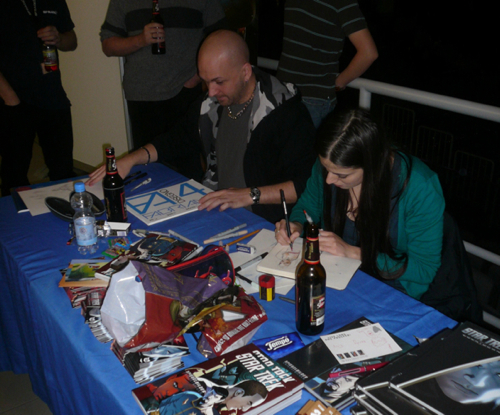
ST: Two different things that I noticed about German conventions: Extremely attractive female Trekkies. And beer served at the signing table. Both of which are an advantage over the US. (laughs)

CG: The two of you are mainly here because you do Star Trek comic books for IDW, which are published here in Germany by Cross Cult. Are both of you Star Trek fans?

ST: I’ve been one my whole life.

CG: You are a real Trekkie?

ST: Oh yeah, absolutely.

DM: I’m not that big of a fan. I watched the TV show with my sister, when I was a child, the original one with Spock and Kirk. Although I did enjoy the evolution of Star Trek and watched a number of episodes of the following Star Trek series when I started working with Scott, my love is with the old Enterprise crew. I watched the old episodes repeatedly. And I’m a fan of J.J. Abrams‘ new batch of Star Trek. I just love the old crew with Uhura and Kirk.

CG: So you must have really enjoyed doing Star Trek: Mirror Images because you had to draw all the old characters.

DM: Yes, that one has all the classic characters I really love. But I also have a soft spot for [Deep Space Nine’s] Sisko and [The Next Generation’s] Picard. Scott thinks it’s because we have the same hair style. (laughs)

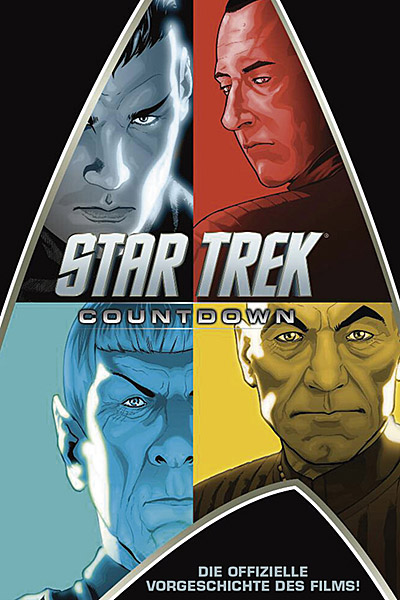
countdownCG: When you did Star Trek: Countdown, the prequel to the new movie, there was probably a lot of pressure on you because of all the hype the film was surrounded by.

ST: There was no pressure on me because I wasn’t allowed to write it. (laughs)

DM: It was written by Tim Jones and Mike Johnson.

CG: Were they on the film’s production team?

DM: Yes, they work for Robert Orci and Alex Kurtzman, who wrote the script for the new Star Trek movie. The script for Countdown was based on a plot by Orci and Kurtzman. Working on it was a lot of pressure for me because everything was absolutely secret when I started. I saw the movie three months after I had done the last issue. It wasn’t a problem to draw the good guys in Countdown because they were characters from Star Trek: The Next Generation plus Spock, but the bad guy, Nero, was a new character from the movie. So I didn’t know how the actor [Eric Bana] would appear in the movie and how his ship, the Narada, was shown. I had some pictures of the Narada and some stuff about the environment, but I never saw how the ship appeared on screen. When I saw the movie the first time I was surprised because I had never imagined that the Narada would seem so alive.

CG: But are you nevertheless satisfied with the finished comic book? From what I’ve read so far the fans‘ reactions were pretty positive.

ST: The reactions have been great. It was the first time in years I got to enjoy David’s work strictly as a reader. I thought it was great, and the writers did a great job with it. Sales in the US were really good, and the readers’ reactions were almost unanimously positive.

tzaCG: The two of you collaborated on Star Trek: Mirror Images and there is another book that is supposed to come out in Germany soon: Intelligence Gathering [German release in December 2009 as Tor zur Apokalypse].
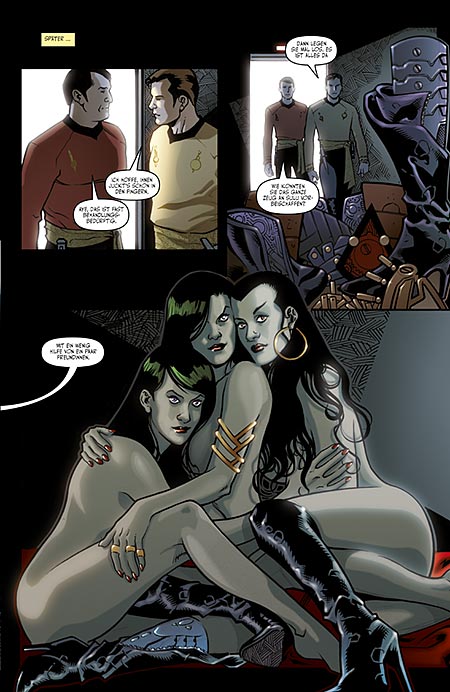
ST: Intelligence Gathering – that’s a Next Generation series. We’ve also done a Klingon series, Blood Will Tell, and that is also slated for a German release. And we did Spock: Reflections, which is kind of a pre-prequel to the movie. There we find out what Spock has been doing between the last movies with the old crew and Countdown.

CG: How much freedom do you have when writing stories for Star Trek comics?

ST: Pretty much. Overall, they are pretty good to me. I have to make a first pitch about what I want to do, and once it got approved they pretty much trust me.

CG: I imagined there must be strict rules if you wrote for a franchise like Star Trek.

ST: It’s strict, but not if you are doing it as long as we do [Scott’s brother David acts a as co-writer on the Star Trek comics]. We crossed every team, we researched everything … Once we make our pitch to CBS everything is good to go.

CG: David, is it pretty difficult for you as an artist to mostly draw characters who are based on real humans, on actors?

DM: Sometimes it’s really hard. Some actors like Leonard Nimoy as Spock are very particular and characteristic but others like William Shatner as Kirk or David Boreanaz from Angel aren’t so much. They are pretty hard to draw. I work more easily with iconic characters like Spock or Spike [James Marsters] from Angel. It’s real fun to draw Spock because his face is an icon – a SciFi icon. I really like to draw it, and it’s almost relaxing for me.

spiegel3CG: Are fans very concerned about the look of the characters in the comic books? I mean, it is often said about Star Trek fans that they are a very critical bunch.
ST: The thing about the Trekkies is: If you get something wrong, they will let you know. But overall, the response from the Trek fans has been very good on everything we have done. And that’s great to hear for us. Those people pay our bills, and we wouldn’t talk bad about them. They have been very supportive. But if you got a color wrong or you got a uniform wrong, you get an email. (laughs) But that’s good, it keeps us honest. You don’t want us cheap.

CG: You also collaborated on Angel comic books …

ST: Yes, together we did one Angel mini-series: „Auld Lang Syne“.

DM: And an adaptation of „Smile Time“.

ST: Oh yes, we also did a comic book adaptation of the „Smile Time“-TV episode.

CG: Since you are mainly working with existing characters in licensed series, do you prefer telling stories in a shared universe or do you sometimes miss the freedom to do whatever you want in your comics?

ST: It’s tricky because the American comics market is very much dominated by licensed characters. Whether it’s Marvel and DC or Star Trek. Getting your own new character to publishing is very difficult. David and I have a character of our own that we want to get published for several years now. We just didn’t have the opportunity. Every time we want to work on it, one of us gets two or three series to do. We will be doing it, but we didn’t have the time yet.

CG: But you still enjoy what you are doing now?

ST: Of course. Any day where I get to write Spike or David gets to draw Spock is a good day.

CG: And now to the traditional question … David, how did you become a comic book artist?

DM: I started drawing when I was a child and later I studied at the Scuola Internazionale di Comics [International School of Comics] in Rome, the same school where I now teach classes myself. My favorite artists have always been Adam Hughes and Mike Mignola. I buy everything they do. Really everything. Even if it’s only a cover done by one of them, I pick up the book. The other big influence came from manga. I really like the dynamic and cinematic style. I think that along with Adam Hughes and Mike Mignola Katsuhiro Otomo [Akira] is a big influence on my work. And there is also some influence from classic painting. Because of my father, who is a professional painter, I grew up in a house full of art. So, painters like Magritte or Klimt influenced my style too. Mostly the composition of the colors.

CG: That’s interesting …

DM: Yes, and it’s my father’s access to my work if I want to talk with him about it. Because for him everything I do as a comic book artist is so far away from what he does and knows. It’s really kind of funny.

CG: And Scott, you actually started out writing about comics, right?

ST: Well, I kind of got my start when Chris Ryall, who is now the publisher at IDW, and I were working for Kevin Smith. We were running one of his pop culture websites, moviepoopshoot.com. Chris was the editor in chief, I was the associate editor, and at that site I was writing Comics101, my weekly column on comic book history. I’ve done that for three years – never missed a day by the way. I’m still proud of that.

angelCG: Is it still accessible?

ST: The site is gone. But the comics content is still available on my own site now, comics101.com. Well, after two or three years of doing moviepoopshoot.com, Chris got the attention of the folks at IDW, they had realized he was a great editor, and he began working for them. And once he got the job, he asked me if I was interested in writing comics. I told him that if he thinks the right project for me shows up I would love to talk about it. First, I did several short horror adaptations for a book called Doomed. And then they got the Angel license from Fox. And I love Angel! So I said ‚Look, just give me a chance. Let me pitch a story and if they like it – fantastic.‘ I pitched a Spike story, which Fox liked, and so they bought it. So, that was my first Spike story, Spike: Old Wounds, and since then I was doing Spike and Angel fairly regularly. And then they got the Star Trek license. I went like Star Trek! License!! Dude!!!‘ Just open the doors, let me make a pitch!‘ Luckily, the people at CBS have been really receptive to my work.

CG: Are there any characters outside the ones you are working on now that you would really like to get your hands on?

ST: Blue Beetle and Yellow Jacket. Really! We would do our own Marvel/DC crossover with them. David would draw it, I would write it, just give us a chance. (laughs)

CG: You are also kind of a comic book historian. With your background knowledge, what would you say about the present state of the comic book industry? There is this big discussion in Germany as well as in the US about where it is heading. What about digital comics?

ST: Overall, the comic book industry is strong right now. I think the way of the future is to do more and more digital stuff. IDW has been doing some great stuff there and made comics available for the iPod. But eventually, printed comic books will never be going away. They will always be there because people want the haptic experience.

CG: Do you think that this will be more and more in form of graphic novels and trade paperbacks?

ST: Right. I think that the monthly comic book will be sold digitally only in the future. And those books will be collected into trades and hardcovers. That won’t happen next month or next year, but I’m convinced that is the road we are going.

CG: So you look into the future of comic books positively?

ST: Definitely. And there are still too many readers who want their comics every month. Sales are a bit depressed now because of the general economy, but that will change again.

CG: Nice closing words. Thanks for the interview, you two!

RELATED LINKS:
Comicgate review of Star Trek: Spiegelbilder (German)
Comicgate review of Star Trek: Countdown (German)
David Messina’s Blog
Scott Tipton’s Comics 101
Cross Cult (German publisher of Star Trek comics)
Preview of Star Trek: Tor zur Apokalypse on Treknews.de (German)

Photos © Andreas Völlinger/comicgate.de

52 mal berührt: Voodoo #1

DC Comics startet sein komplettes Superhelden-Universum neu. COMICGATE trifft sich zum Speed-Dating mit den Erstausgaben aller 52 Serien. Wird es dabei zu heißen Spätsommer-Flirts kommen? Zu wilden Schlabberzungenküssen? Oder bleibt es doch eher beim Austausch lauer Unverbindlichkeiten? Hier ist alles drin, Freunde der Sonne. Folge 44 von 52: VOODOO #1 von Ron Marz und Sami Basri.

voodoo

BJÖRN: Voodoo sollte ein Vertigo-Titel sein: Ron Marz schreibt eine Geschichte, die in einem Stripclub spielt … aber Gott steh uns allen bei, wenn irgendwo eine Brustwarze zu sehen sein könnte. Sami Basri hat seine Damen ganz offensichtlich nackt gezeichnet und ihnen dann Reizwäsche über die anstößigen Stellen gepinselt und entblößt damit die Lächerlichkeit des ganzen Unterfangens. Hey, wenn ihr einen Comic in einem Stripclub spielen lasst, dann solltet ihr zumindest keine Angst vor der weiblichen Brust haben. Besonders, da Voodoo vom gesamten Setup her „B-Film“ schreit und da Nacktheit und Gewalt zum Konzept gehören.

Spannend ist die kognitive Dissonanz des Comics: Wir haben eine Szene in der Umkleide der Stripperinnen, in der die sich darüber austauschen, dass sie auch Menschen sind. Mit Träumen. Kindern. Sorgen. Nöten. Hoffnungen. Eigenen Haustürschlüsseln. Nicht nur Titten und Ärschen. So wie in dem Zelluloidklassiker Showgirls. Aber zwei Seiten davor präsentieren uns Marz und Basri Panels, in denen eine Kellnerin redet, während die Kamera so auf ihr Dekolleté fixiert ist, dass sie nicht einmal das Gesicht der Kellnerin einfängt.

Sami Basri, soviel muss man ihm lassen, zeichnet verdammt attraktive weibliche Figuren, und in Kombination mit der Farbgebung von Jessica Kholinne sieht Voodoo verflixt sauber, aufgeräumt und schick aus. In Sachen Mimik ist Basri allerdings eher begrenzt. Alle Gesichter haben einen – der Lokalität vielleicht angemessenen – Pornstar-Blick, mit toten, glasigen Augen.

In der Abteilung Geschichte wird derweil dünne Suppe gekocht: Voodoo ist ein Alien und zwei Agenten verfolgen sie. Einer davon ist dumm genug, sich von ihr einen Lapdance geben zu lassen, während er enthüllt, dass man ihr auf der Spur ist und sie entweder freiwillig mitkommt oder seziert wird. Was wohl der Welt bescheuertste Idee ist. Das alles hätte man auch in ein paar Seiten erzählen können, aber dann hätte Basri keinen Grund gehabt, eine volle Ausgabe mit Stripperinnen zu zeichnen.

Der Cliffhanger ist ganz nett in einer „Akte X, ca. 1994“-Weise, aber Voodoo ist ein weiterer Comic, der 20 Seiten braucht, um sich kaum von der Stelle zu bewegen und allerhöchstens anzureißen, worum es hier geht. Mal abgesehen davon, dass der Aufbau eher nach Mini- als nach Ongoing-Series aussieht.

ZOOM-FAKTOR: 3 von 10!


MARC-OLIVER: Ich hätte wirklich gerne nochmal einen Comic hier, über den ich was Nettes schreiben kann, aber das muss wohl noch warten. Oder fangen wir vielleicht mal so an: Ich stimme zu, was Sami Basri angeht. Der zeichnet lecker Mädchen, und die können auch nicht nur Porno-Blick. Und, immerhin, ein Stripclub als Kulisse ist originell (für einen Superheldencomic zumindest) und eignet sich vielleicht auch gut, das Genre und sein Frauenbild auf die Schippe zu nehmen.

Damit hat sich’s dann aber auch schon wieder mit den Komplimenten, denn die ganze Geschichte funktioniert nur, wenn man über die unwahrscheinliche Dummheit aller beteiligten Figuren hinwegsieht. Und sollte es Marz tatsächlich nur auf die niederen Instinkte der Leser abgesehen haben und billigen Nervenkitzel bieten wollen, wie Du vorschlägst, dann hast Du absolut Recht, dass der Comic dafür viel zu zahm und schnöde daherkommt.

Ob das vom Manuskript her unterm Strich jetzt gewollt und nicht gekonnt ist oder weder gewollt noch gekonnt, das ist dann letztlich auch schnuppe.

ZOOM-FAKTOR: 3 von 10!


Bereits im Juni hatte COMICGATE alle 52 neuen DC-Serien vorurteilslos begutachtet und eingeordnet: Teil 1, Teil 2, Teil 3, Teil 4.

Alle Folgen von „52 mal berührt“